


Hong Kong, China and a footballing dilemma
- International
- April 25, 2024
- No Comment
- 137
Sutcliffe felt that not all of those in attendance were football fans.
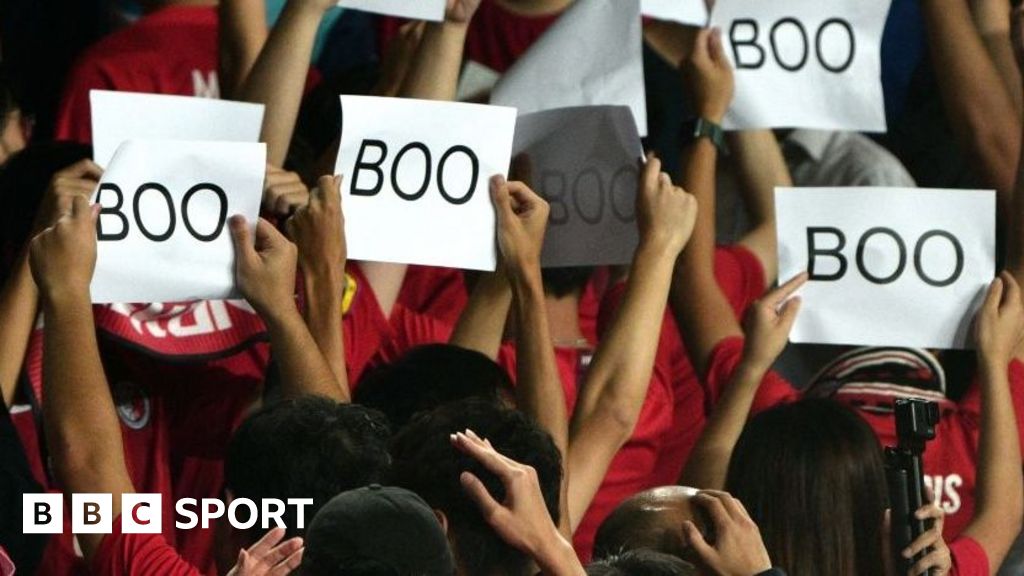
“Undoubtedly, international matches provided a platform for Hong Kong residents to voice their frustrations,” says Sutcliffe.
“The booing of the national anthem provided great publicity for them. Attendances went up and many people came to matches who under normal circumstances would never have gone to a football match.”
Sutcliffe cannot recall any complaints from Beijing.
“We were certainly put under pressure by the Hong Kong SAR [Special Administrative Region] Government to do everything we could to stop it,” he says.
“We ran publicity campaigns. We introduced more stringent security at matches, including searches and confiscation of banners. We couldn’t stop it altogether and the upshot was that we were fined by Fifa several times.”
In 2020 Hong Kong’s legislature also took measures, passing a bill that criminalised disrespect to the anthem – with a maximum prison sentence of three years.
Even so, in the first home game open to the public since the introduction of the new law in September 2022, the national anthem was again booed by sections of the crowd before kick-off against Myanmar.
Three months later, the 83 sporting associations in Hong Kong were told that they had to add “China” to their names or risk losing funding. About three-quarters had not previously done so.
Football fans flocked to buy the last batch of shirts that still had the former Hong Kong logo, before the word “China” was added to the dragon crest.
Sutcliffe tried to strike the right balance in accommodating China’s requests while maintaining some distance and a separate identity
“It was kind of an unwritten rule not to get too close in case Fifa decided to take away the individual member status,” he says.
“There was no sharing of resources or knowledge or anything of that nature.
“Indeed, we had a closer relationship with Japan, who were much more altruistic and saw it as their role to mentor smaller member associations and improve football across Asia.”
The Chinese Super League (CSL) boom briefly threatened to realign those relationships.
At the start of 2010s Chinese top-flight clubs started spending huge amounts on world-famous players such as Nicolas Anelka, Didier Drogba, Hulk and Carlos Tevez, while coaches such as Marcello Lippi, Luiz Felipe Scolari and Fabio Capello arrived.
Attendances rose to become the biggest in Asia and standards also increased. Guangzhou Evergrande, just an hour’s high-speed train ride away from Hong Kong, became China’s first Asian Champions League winners in 2013 and triumphed again in 2015.
#Hong #Kong #China #footballing #dilemma