



Sustainable living gives Hungarian families hope for the future | Environment
- Politics
- May 4, 2024
- No Comment
- 123
Laszlo Kemencei lives as sustainably as possible on his small farm in eastern Hungary. He believes the land is effectively borrowed from his daughter, so he must do all he can to preserve it for the future.
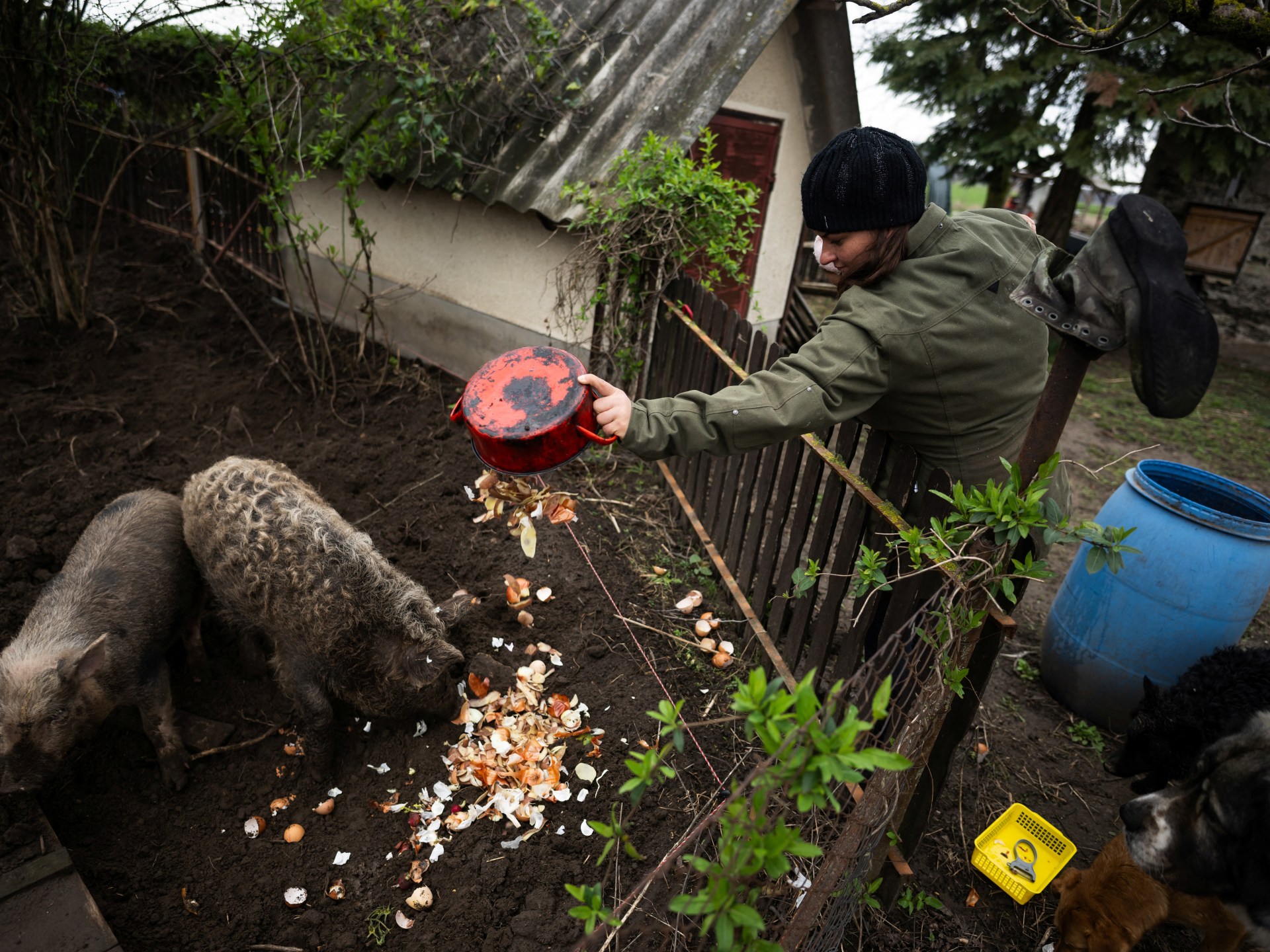
Kemencei, 28, his wife Cintia, 31, and their daughter Boroka, who is almost two, moved to the farm outside Ladanybene three years ago. They keep horses, pigs and chickens on an area of 4.5 hectares (11 acres), which they partly lease for grazing.
They do not use pesticides, keep their animals free range, and dig the land as little as possible to preserve the structure and moisture of the rich soil. They grow their own vegetables and slaughter or barter the meat they need while trading the rest with families who choose a similar lifestyle.
Kemencei says while becoming fully self-sufficient seems an unrealistic goal, they rely minimally on external resources.
“This land, we have not inherited from our fathers, but we have it on a lease from our children … so we try to live and farm the land in a sustainable way,” he says.
While there are no statistics on how many families are following a similar lifestyle in Hungary, anecdotal evidence suggests it is a growing trend.
Some want to rein in their cost of living, while others want to escape a consumer-driven society or live a more environmentally friendly life.
Kemencei estimates there are about 1,000 families trying to embrace some form of sustainability, either alone or as part of informal barter arrangements, or as part of more structured eco-villages.
Currently, they do not live off the grid. They have internet and buy electricity and gas for heating. But their water comes from a well and they hope to install solar panels and a wind turbine when they can afford it, Kemencei says.
They can get by on about 250,000 forints ($690) per month, outside of emergencies. They buy milk, sugar and other essential items that they cannot grow or produce themselves.
#Sustainable #living #Hungarian #families #hope #future #Environment