


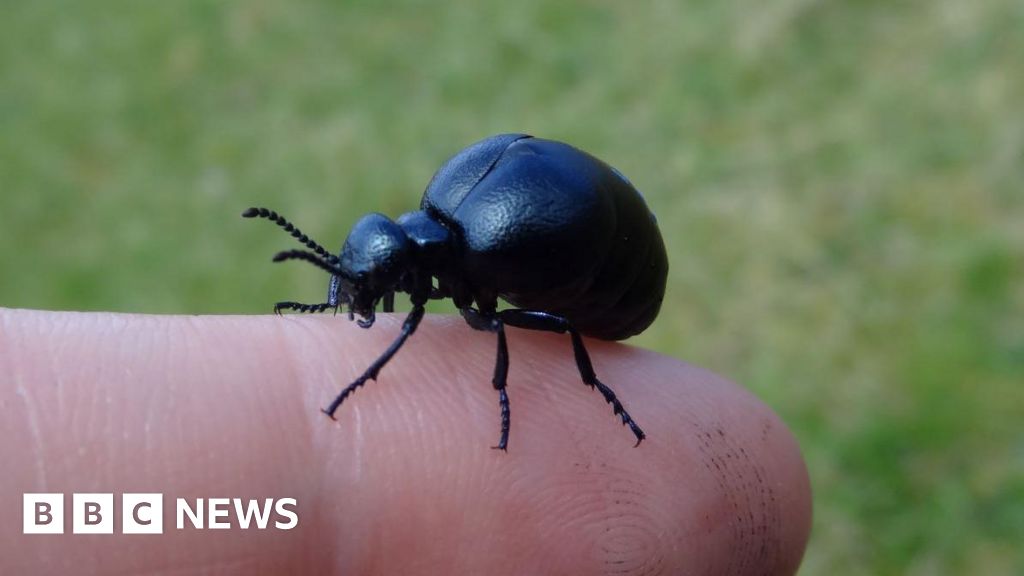

Evidence of rare oily-kneed beetles
- International
- May 8, 2025
- No Comment
- 90
BBC Scotland Highlands and Islands reporter

 Sally Morris
Keen-eyed wildlife watchers are being asked to look out for a rare parasitic insect with an unusual lifecycle.
The larvae of the Short-Necked Oil Beetles lurk among flowers waiting for a passing bee to carry them back to its nest, where they feed on all the pollen the bee has collected.
The species’ name comes from the stubby shape of the adult beetles and their habit of secreting an oily yellow-orange substance from their knee joints when alarmed.
The organisation behind the appeal, Buglife, said Scottish populations of the insect have been found in flower-rich habitats in the Hebrides.
There were no reports of Short-Necked Oil Beetles in the UK for almost 60 years after 1948 and habitat loss was blamed for bringing the species to the brink of extinction.
They were rediscovered in Devon in 2006 and on the Isle of Coll in 2009.
Since then in Scotland, populations have been found on Tiree, Islay, Barra and Uist.
Short-Necked Oil Beetles are one of 37 species being prioritised for conservation efforts under the Species on the Edge programme led by government agency NatureScot.
Other species on the list include birds such as the Arctic Tern and Curlew, as well as Daubenton’s Bat, the Great Yellow Bumblebee and Scottish Primrose.
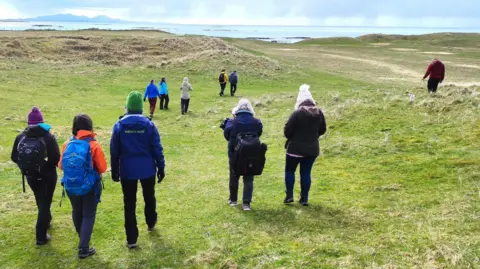
Workshops have been held in Uist and Barra to help islanders identify the beetles.
Sally Morris of Buglife Scotland, said: “We’re looking to raise awareness of the species and find out a lot more about its needs, its ecology, abundance and distribution.
“We have five species of oil beetle in the UK.
“Three are found in Scotland and the Short-Necked Oil Beetle is the rarest.”
She said the species is vulnerable to extinction.
 Sally Morris
The beetle’s lifecycle relies on solitary bees, species which do not live in colonies and have nests tended by a single female.
The beetle larvae are only a few millimetres long and have hook like feet to snag on to a passing bee to be carried back to the burrow where the bee has built its nest.
Later, after feasting on the contents of the nest, the insects emerge as adults.
Only about one in 10,000 larvae make it to adulthood.
Ms Morris said: “Oil beetles need flower-rich habitat and sites with areas of bare ground for borrowing, both for the oil beetles themselves and for the solitary bees that they parasitize.”
#Evidence #rare #oilykneed #beetles