


Cocaine lab found on property of Bolivia’s former drug czar
- International
- September 27, 2025
- No Comment
- 43
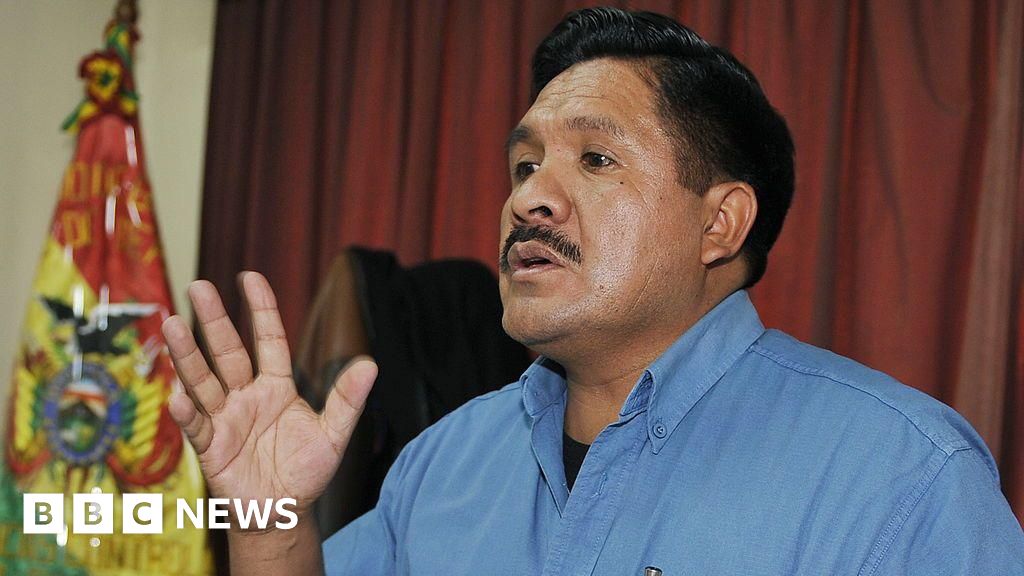
Police in Bolivia have arrested the country’s former counternarcotics czar after finding a cocaine lab on one of his properties, although it is not yet clear if he was aware of its existence.
Felipe Cáceres was the head of the government department for controlled substances from 2006 to 2019 and in that role was in charge of Bolivia’s fight against illegal drugs.
The arrest of Cáceres is the latest scandal to hit Bolivia’s anti-drugs agencies with one former head of the counternarcotics police currently awaiting trial in the US on charges of drug smuggling and another already in jail for drug trafficking.
Bolivia is the third largest producer of cocaine in the world after Colombia and Peru.
Cáceres, 63, was arrested on Tuesday morning in Puerto Villarroel, in the Cochabamba region, where much of the country’s coca crop is grown.
Coca leaves – which act as a mild stimulant – have been brewed in teas and chewed for centuries in Bolivia.
Under Bolivian law, 22,000 hectares of the crop can be legally planted nationwide for medicinal use, traditional consumption and use in religious ceremonies but anything above that figure is meant to be destroyed.
Before being appointed as the head of Bolivia’s department for controlled substances, Cáceres was a leader in one of the coca-growers’ unions.
But police said what they found on one of his properties was a laboratory in which coca leaves are turned into cocaine hydrochloride, a drug which is illegal in Bolivia and most other countries worldwide.
Bolivia’s interior minister, Roberto Ríos, said that while the lab – which was big enough to employ 10 people – was found on land owned by Cáceres, investigations were still under way to determine if he was the owner of the lab.
Ríos added that Cáceres had been detained 500m from the lab at a nearby sand and gravel plant he owns.
When he was anti-drug czar, Cáceres had close links to the president at the time, Evo Morales.
Morales told local media that the arrest of Cáceres was a “set-up” and accused the government of using it as a smokescreen “to detract from its own scandals”, although he did not elaborate on what scandals he meant.
A lawyer for Morales’s party added that investigators would have to prove there was a direct link between the cocaine lab and Cáceres.
This is not the first time Bolivian counternarcotic officials have come under investigation.
Last year, a former chief of the counternarcotics police force, Maximiliano Dávila, was extradited to the US on drug trafficking charges, which he denies.
Another former boss of the counternarcotics police, René Sanabria, served a 14-year-sentence in the US after he was caught trying to smuggle cocaine into the US.
#Cocaine #lab #property #Bolivias #drug #czar