


Expert tells farmers to prepare for the worst as virus spreads
- Science
- November 7, 2025
- No Comment
- 35
Malcolm PriorBBC News rural affairs producer

 PA Media
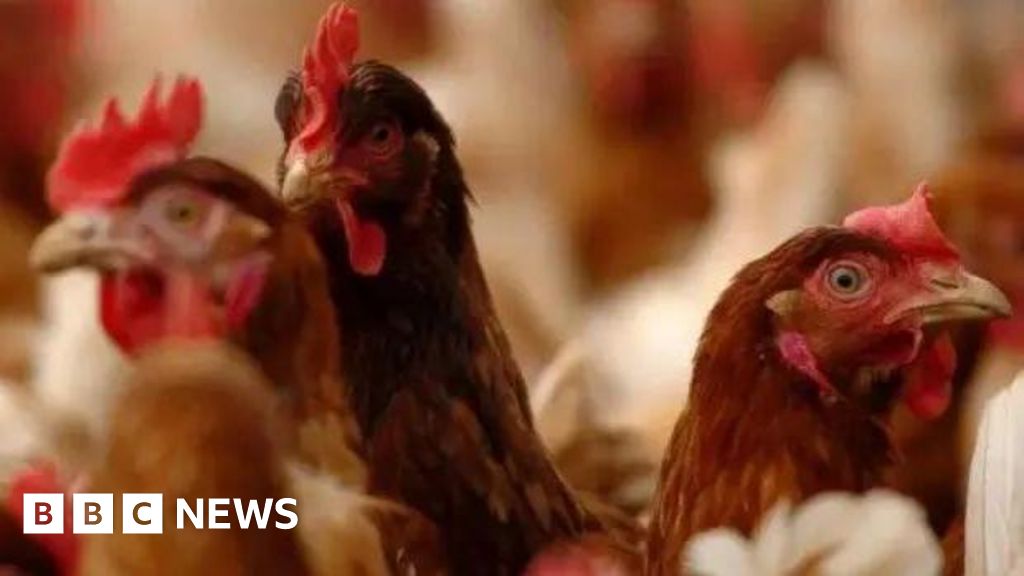
The bird flu virus infecting farm flocks across the UK could be the most infectious yet, the government’s former top expert in avian virology has warned.
The Pirbright Institute’s Professor Ian Brown, formerly director of science at the Animal and Plant Health Agency (APHA), said farmers should be “prepared for the worst”.
With a national mandatory housing order brought into force in England on Thursday, one free-range egg producer in Wiltshire told the BBC she felt “terrible” bringing her 32,000 hens inside but an outbreak would be “disastrous”.
The government said the mandatory housing order would “bring the rates of infection down from the high we are currently experiencing”.
 The Pirbright Institute
So far this season – which began in October – there have been 26 cases of highly pathogenic avian influenza (HPAI) H5N1 on farms across the UK, with 22 in England alone. Whole flocks have to be culled when an outbreak occurs.
Professor Brown told the BBC that the current virus was “as super-infectious as any high pathogenicity avian influenza we’ve ever seen”.
He added that farmers should now “prepare for the worst, I’m afraid”.
“We had a very, very serious epidemic between 2021 and 2023 – in excess of 350 outbreaks in the UK. That’s off the scale,” he explained.
“Now, it’s really, really difficult to state what the final size of this outbreak would be, but the early signals are not great.”
He added that the threat level meant the poultry industry needed to “batten the hatches down, review their biosecurity and redouble their efforts”.
 Sarah Godwin
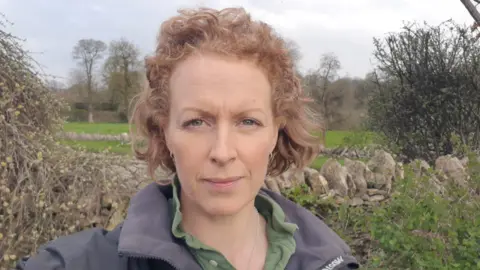
Sarah Godwin runs a mixed egg, arable and dairy family farm near North Wraxall, in Wiltshire, with her husband and brother-in-law.
Her 32,000-laying hens would normally be outdoors for most of the day. They now have to be kept in their barns around the clock.
“It is terrible. We would love to see them out but it is just a necessary evil because the risk of them catching avian influenza is so high and the consequences are so disastrous for a producer, and for the hens as well,” she explained.
But despite bringing the hens inside and putting in place strict biosecurity measures, Mrs Godwin remains “very nervous”.
She said: “It only takes a tiny, tiny bit of contaminated muck from a wild bird or something that’s been brought into the shed on somebody’s boots.
“It’s literally grammes that can infect the whole flock. And at that point, the whole flock has to be culled.”
Robust biosecurity
The UK Health Security Agency (UKHSA) still says the risk to the general public’s health is “very low” while the Food Standards Agency (FSA) has said bird flu poses a very low food safety risk and that properly-cooked poultry and eggs are safe to eat.
But Professor Brown warned that the virus needed to be continually monitored for mutation.
“The good news is, basically, these viruses are still bird viruses. They don’t want to be in a human,” he said.
“We have to continually monitor the virus, because it’s an influenza virus and influenza viruses change.
“Even when they’re happy in a species such as birds they still undergo changes. They make mistakes and errors when they replicate.
“So that could always spew out a variant that might be more infectious for humans.”
The UK’s chief veterinary officer Christine Middlemiss urged all bird keepers to comply with the new housing measures and to continue to exercise “robust biosecurity measures, remain alert for any signs of disease and report suspected disease immediately to the Animal and Plant Health Agency”.
“I appreciate the impact these measures have on industry and am extremely grateful for the continued cooperation of the poultry sector,” she said.
“We know from previous years that housing birds will bring the rates of infection down from the high we are currently experiencing.”
The British Poultry Council’s chief executive, Richard Griffiths, said the housing order was “the right move at the right time” while Gary Ford, from the British Free Range Egg Producers Association, said it gave “the clarity and consistency that producers have been calling for”.
#Expert #tells #farmers #prepare #worst #virus #spreads