


Endangered species’ habitat could be at risk under Trump proposal : NPR
- Politics
- April 17, 2025
- No Comment
- 94

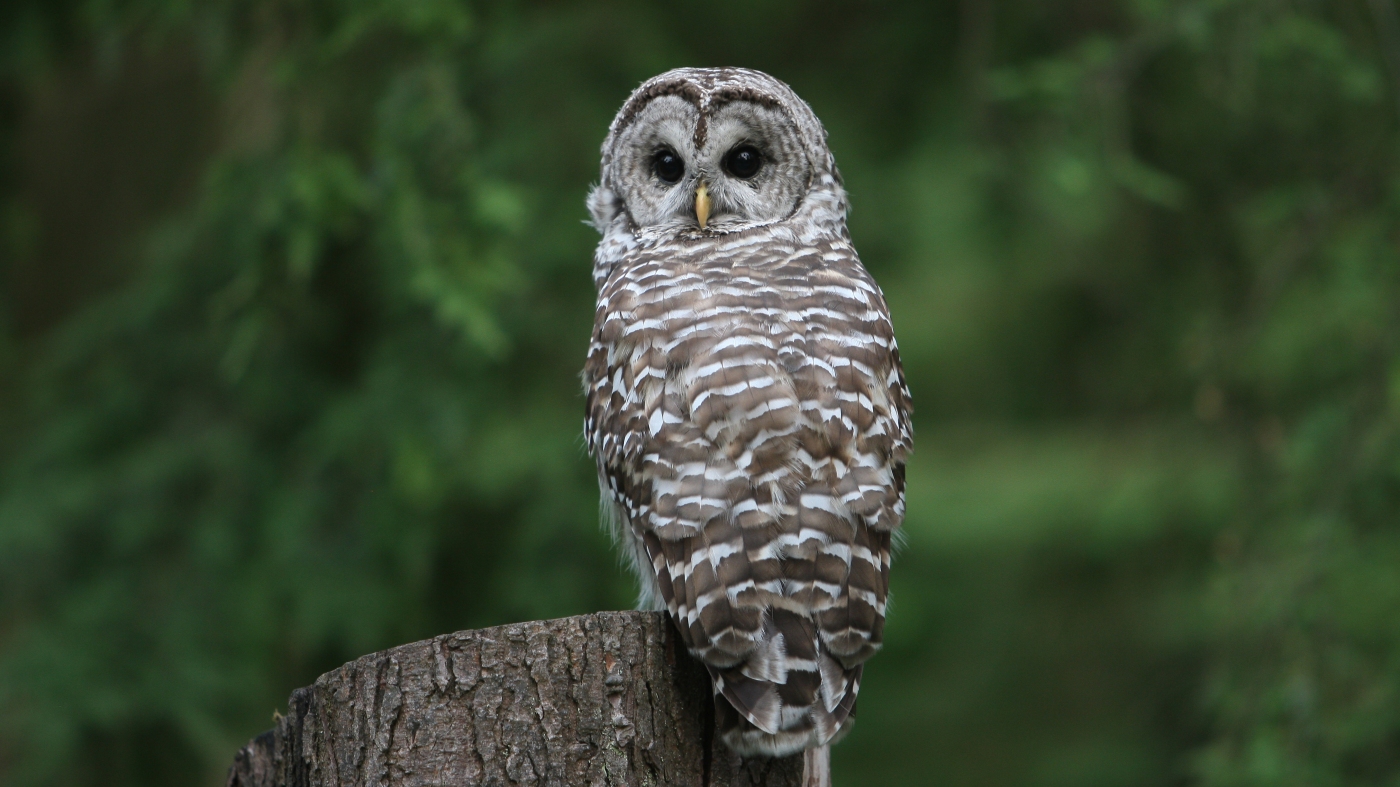
Northern spotted owls, like the one pictured here, are one of many species whose habitat was historically protected by the Endangered Species Act.
Tom Szczerbowski/Getty Images North America
hide caption
toggle caption
Tom Szczerbowski/Getty Images North America
The Trump administration is proposing to significantly limit the Endangered Species Act’s power to preserve crucial habitats by changing the definition of one word: harm.
On Wednesday, the administration proposed a rule change that would essentially prohibit only actions that directly hurt or kill actual animals, not the habitats they rely on. If finalized, the change could make it easier to log, mine and build on lands that endangered species need to thrive.
“Habitat loss is the biggest single cause of extinction and endangered species — it makes sense to address it,” said Brett Hartl, government affairs director at the Center for Biological Diversity. He called efforts to deny that cause “callous and reckless.”

“Any conservation gains species were making will be reversed — we’re going to see losses again,” he said.
Under the Endangered Species Act, it’s illegal to “take” an endangered species. By law, “take” is defined to mean actions that harass, harm, or kill species. For decades, federal agencies have interpreted “harm” broadly, to include actions that modify or degrade habitats in ways that impair endangered species’ ability to feed, breed or find shelter.
That interpretation has been a crucial part of how the Endangered Species Act has protected over 1,700 species since its passage in 1973, said Hartl. It’s helped preserve spawning grounds for Atlantic Sturgeon, allowing them to mate and sustain the population. It’s protected old-growth forests in the Pacific Northwest that house northern spotted owls and red-cockaded woodpecker, saving them from extinction.
In the 1990s, timber companies that wanted to harvest those old-growth forests challenged the government’s broad interpretation of harm. The Supreme Court ultimately upheld that interpretation in a 6-3 decision.

In a dissenting opinion, Justice Antonin Scalia disagreed with that interpretation. He argued that in the context of wild animals, “take” should be interpreted more literally, as an affirmative act directed against a particular animal, not an act that indirectly causes injury to a population.
The Trump administration cites Scalia’s argument in its proposal, saying it’s “undertaking this change to adhere to the single, best meaning of the ESA.”
Conservation experts argue it makes no sense to adopt such a narrow definition of harm. “If you’re a prairie chicken in the southwest, and there’s an oil and gas developer and they want to destroy your prime breeding display grounds, the bird can’t mate,” said Hartl.
“You’re not actually harming any of them directly,” he said, but the end result is essentially the same.
The public has 30 days to comment on the proposed rule change. The move will also likely be challenged in court.
#Endangered #species #habitat #risk #Trump #proposal #Newsportu