


Faces made of living skin make robots smile
- Health
- June 25, 2024
- No Comment
- 122
By Michelle Roberts, Digital health editor, BBC News

 ©2024 Takeuchi et al. CC-BY-ND
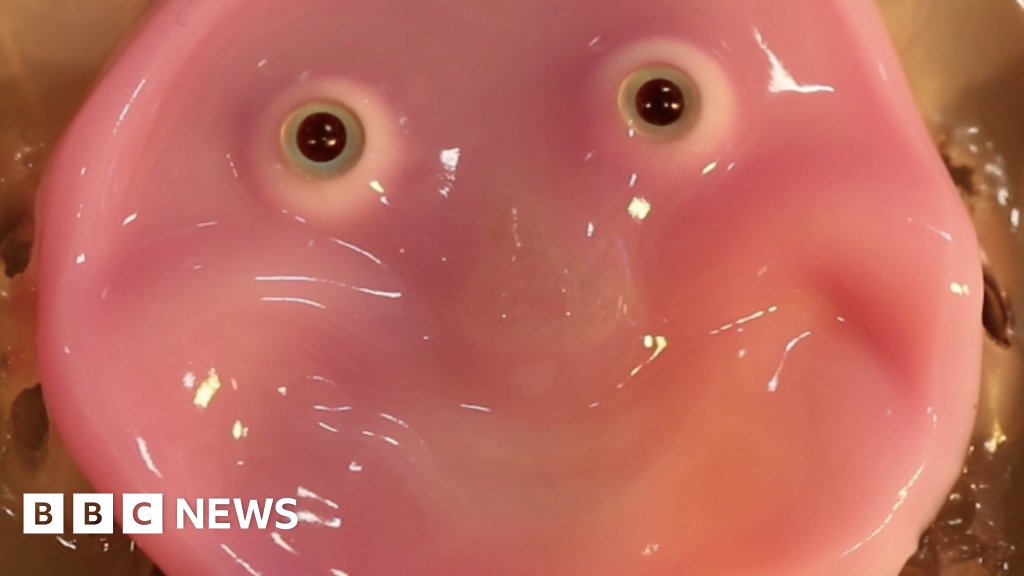
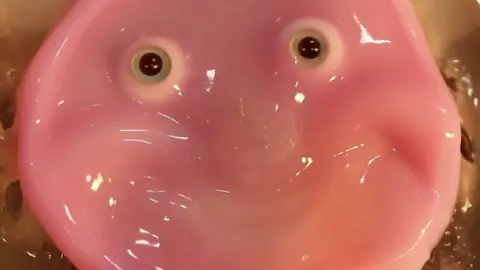
Japanese scientists have found a way to attach living skin to robot faces, for more realistic smiles and other facial expressions.
The breakthrough came from copying tissue structures in people, according to the team at Tokyo University.
The prototype may appear more Haribo than human-like.
But the researchers say it paves the way to making convincingly realistic, moving humanoids with self-healing skin that will not easily rip or tear.
 ©2024 Takeuchi et al. CC-BY-ND
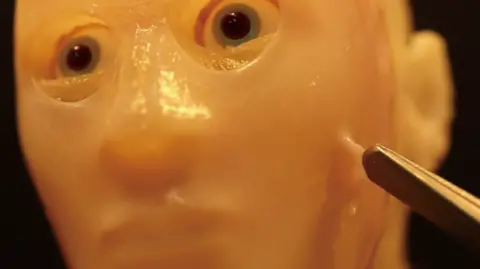
The artificial skin is made in the lab, using living cells.
Not only is it soft, like real skin but it can repair itself if cut, the scientists say.
Past attempts to attach it proved difficult, though.
The team tried using mini hooks as anchors – but those damaged the skin as the robot moved.
In people, the skin is tethered to underlying structures by ligaments – tiny ropes of flexible collagen and elastane.
To recreate that, the researchers drilled lots of little holes into the robot and applied a gel containing collagen, and then the layer of artificial skin on top.
The gel plugs the holes and tethers the skin to the robot.
Plastic surgery
“By mimicking human skin-ligament structures and by using specially made V-shaped perforations in solid materials, we found a way to bind skin to complex structures,” lead researcher Prof Shoji Takeuchi said.
“The natural flexibility of the skin and the strong method of adhesion mean the skin can move with the mechanical components of the robot, without tearing or peeling away.”
The latest results are published in the journal Cell Reports Physical Science.
It will take many more years of testing for the technology to become an everyday reality, the researchers say.
“Another important challenge is creating human-like expressions by integrating sophisticated actuators, or muscles, inside the robot,” Prof Takeuchi said.
But the work may also be useful in research into skin ageing, cosmetics and surgical procedures, including plastic surgery.
#Faces #living #skin #robots #smile