



Golden eagle collision concerns over Walkerburn wind farm plans
- International
- June 12, 2025
- No Comment
- 86

 Phil Wilkinson
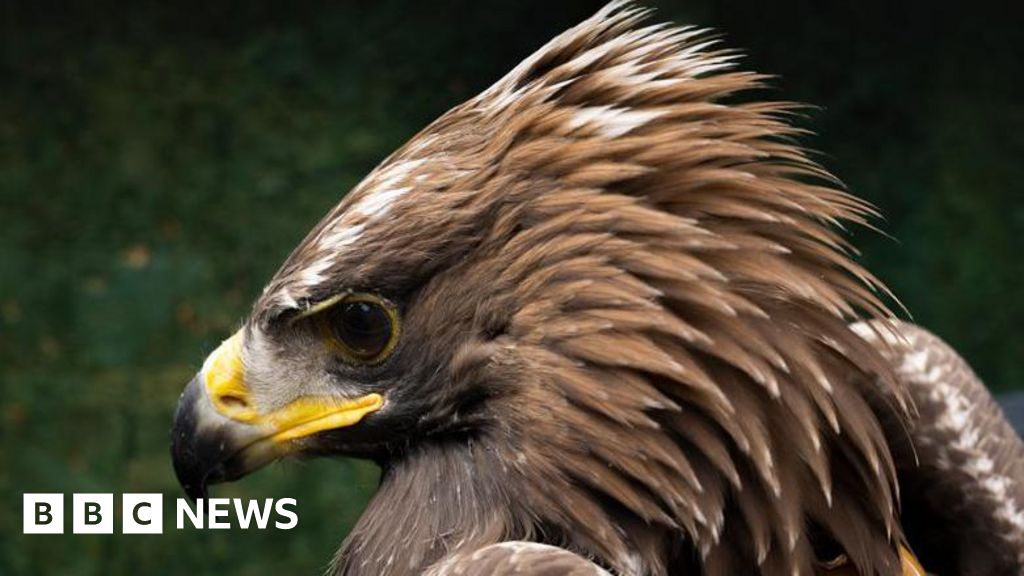
A pioneering project to boost golden eagle numbers in the south of Scotland has raised collision risk concerns about a wind farm plan in the Borders.
Fred Olsen Renewables wants to construct eight turbines at Scawd Law near Walkerburn.
The charity Restoring Upland Nature (RUN) – formerly the South of Scotland Golden Eagle Project (SSGEP) – has objected to the scheme due to its potential impact on the nearby birds.
The company has said the wind farm – which it has reduced in scale – could contribute £8m to the local economy over its operational lifetime.
The first chicks from the project were released in a secret location in the Moffat Hills in 2018 having been brought from the Highlands.
At the time there were only between two and four breeding pairs in the south of Scotland.
Numbers have risen to about 50 and they have spread their wings across the border into England.
However, conservationists are concerned at the impact the Scawd Law scheme could have in the Moorfoot Hills which are home to one of the first settled breeding pairs from the project.
RUN’s Dr Cat Barlow said they did not believe it was the right place for a wind farm.
“The Additional Information Report (AIR) currently being used by the site’s developers is dated and substantially underestimates the impact on golden eagles at a particularly critical time for the local population,” she said.
“Breeding territories must remain undisturbed for long-term population sustainability, as golden eagles are highly sensitive to disturbance and tend to avoid areas around wind turbines.
“The expansion of wind farms without rigorous, up-to-date environmental data risks pushing these birds out of the very landscapes they need to survive.”
She said a new impact assessment was needed as the current one underestimated the risk of collision.
Dr Barlow added: “We know that the drive for renewable energy comes from a position of caring for the environment.
“Indeed, it is key to reducing the carbon emissions which cause climate change – the greatest long-term threat to Scotland’s wildlife.
“We are supportive of renewable energy developments in the right place, but it is crucial that the most up-to-date insights are used in the consideration of proposals to ensure wildlife and renewable energy can thrive together.”
Fred Olsen Renewables has been approached for comment.
#Golden #eagle #collision #concerns #Walkerburn #wind #farm #plans