


Nvidia Signals Pivot to Physical AI at CES 2026
- Economy
- January 7, 2026
- No Comment
- 11
Please note that we are not authorised to provide any investment advice. The content on this page is for information purposes only.
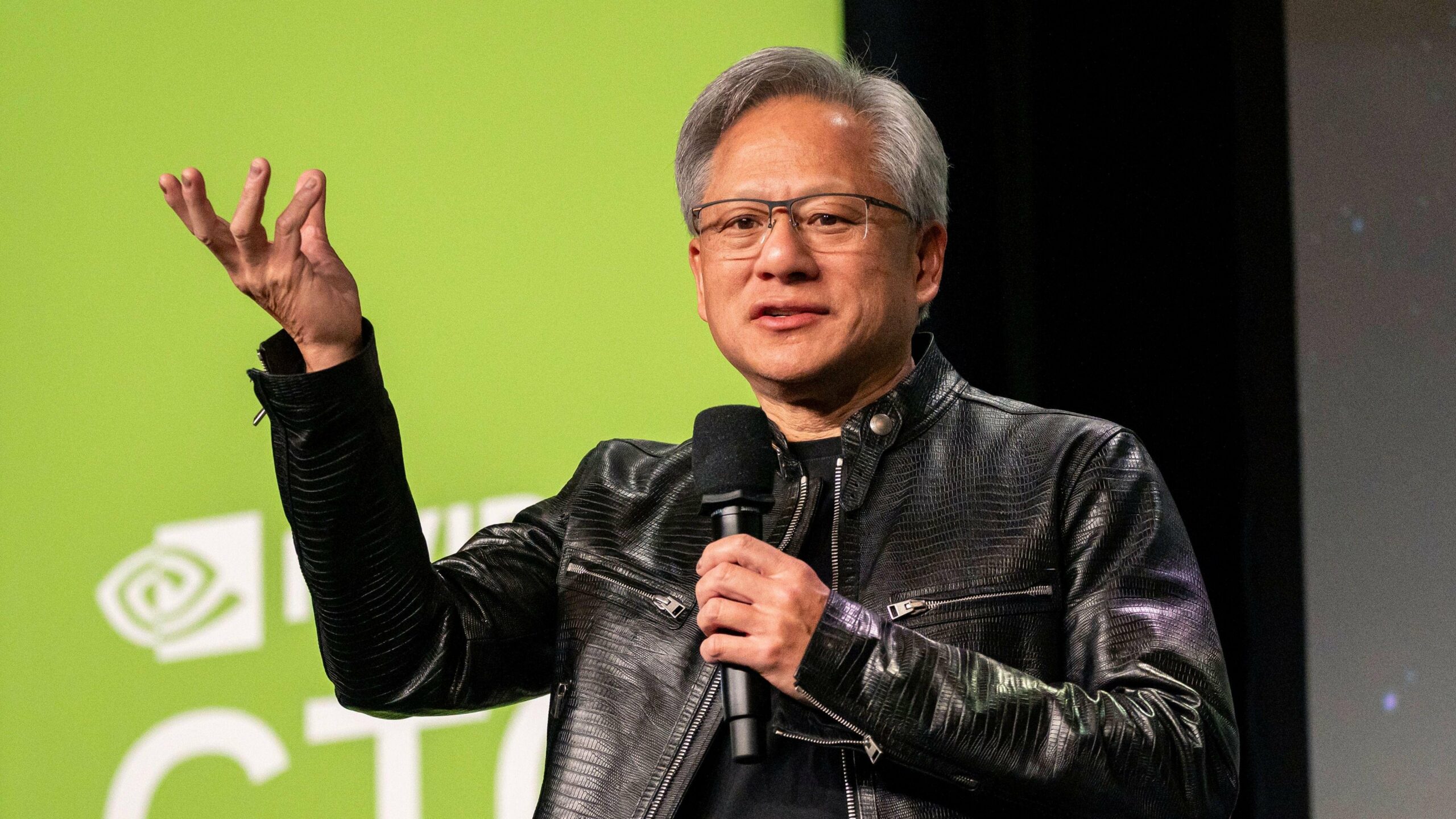
Nvidia CES 2026 keynote, led by CEO Jensen Huang, marked a departure for the company as the focus shifted to “Physical AI” or the evolution of AI from digital assistants to machines that can reason and act in the real world. Here are the key takeaways from the event.
Nvidia Provided Details About Vera Rubin
Nvidia provided more details about Vera Rubin. Named after the pioneering astronomer, the Rubin platform is the successor to the Blackwell architecture. Rubin is Nvidia’s first “extreme-codesigned” system, where GPUs, CPUs (Vera), networking (BlueField-4), and storage are engineered as a single fabric. It is designed to reduce the cost of AI tokens to a tenth of current costs while providing significantly higher throughput per megawatt.
“Rubin arrives at exactly the right moment, as AI computing demand for both training and inference is going through the roof,” said Nvidia CEO Jensen Huang in a statement.
He added, “With our annual cadence of delivering a new generation of AI supercomputers — and extreme codesign across six new chips — Rubin takes a giant leap toward the next frontier of AI.”
Reacting to Rubin, William Blair analyst Sebastien Naji said, “Nvidia highlighted that given the significant increase in performance in Vera Rubin, it would take roughly one-fourth the number of GPUs [graphics-processing units] to train a model versus Blackwell.”
Autonomous Driving
Nvidia Sees autonomous driving as the next growth driver. While currently that vertical accounts for only about 1% of Nvidia’s revenues, it holds a lot of promise. “We imagine that someday, a billion cars on the road will all be autonomous,” said Huang. He added, “You could either have it be a robotaxi that you’re orchestrating and renting from somebody, or you could own it.”
Nvidia reaffirmed its goal for Level 4 Robotaxi deployments by 2027. The company is positioning its software stack as a “robotaxi-ready” reference architecture, inviting other manufacturers to build on their open-source foundation to compete with closed systems like Tesla’s FSD.
NVIDIA unveiled Alpamayo, a new family of open-source AI models and tools designed to solve the “long-tail” of autonomous driving. Alpamayo 1 is a 10-billion-parameter Vision-Language-Action (VLA) model that processes video input and generates driving trajectories, but crucially, it also outputs “chain-of-thought” reasoning, explaining why it chose a specific action.
For example, if a car encounters a broken traffic light, the model can reason that it should follow a traffic officer’s hand signals or standard yielding rules rather than just stopping indefinitely.
Physical AI
Huang sees physical AI as the next big opportunity and said, “The ChatGPT moment for robotics is here. Breakthroughs in physical AI—models that understand the real world, reason and plan actions—are unlocking entirely new applications.”
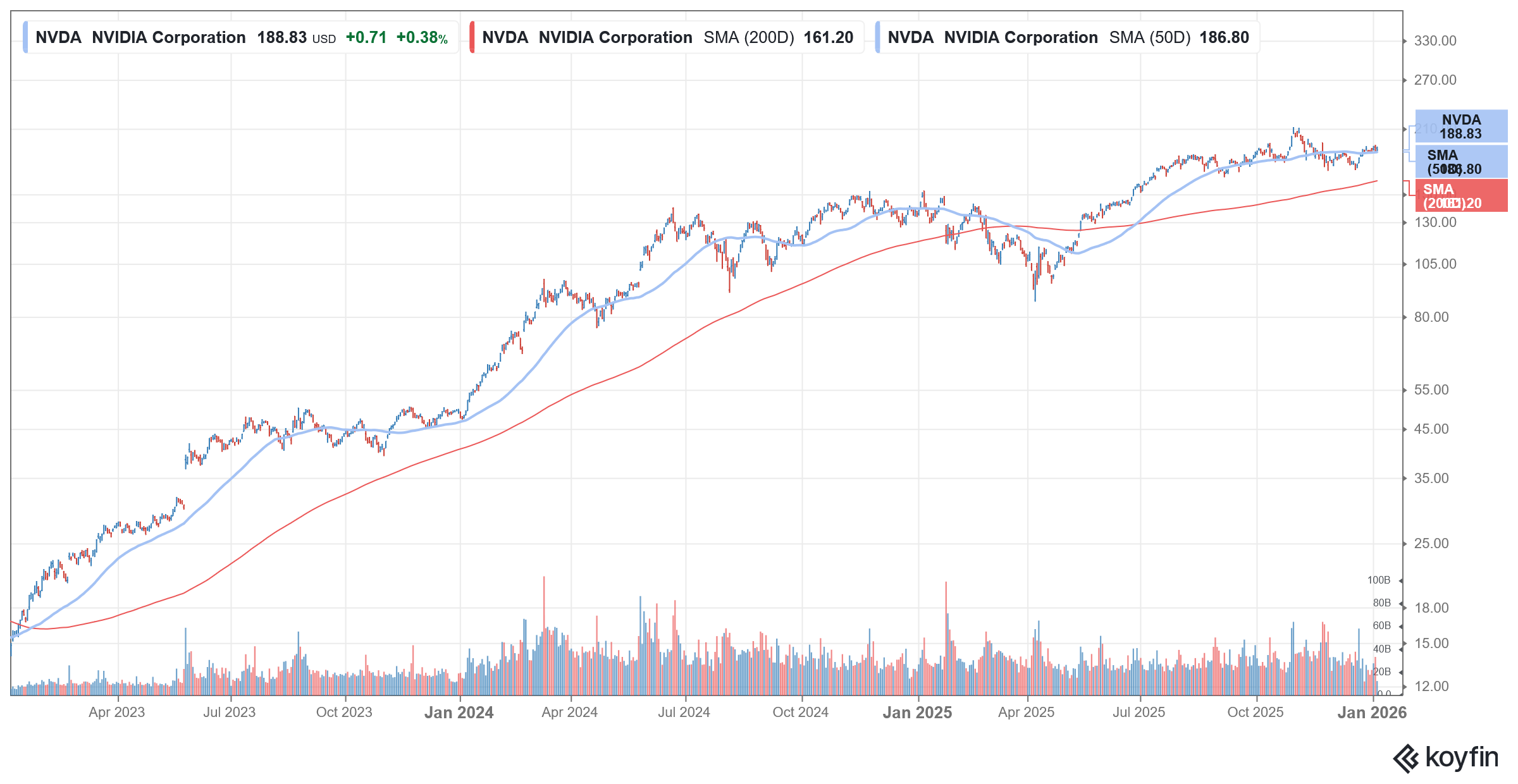
The view is shared by Wedbush analyst Dan Ives, who is known for his perma-bullish views on tech stocks. “We believe the robotics and autonomous technology market represents an incremental market opportunity that Nvidia can tap into, which speaks to our view that this company will exceed $5 trillion market cap in the near-term and ultimately could be a $6 trillion market cap,” wrote Ives in a research note.
Nvidia Introduced the Cosmos Family of Models
Nvidia introduced the Cosmos family of foundation models, which are designed to give robots physical intuition. Cosmos can generate realistic videos from single images and predict the physical trajectories of objects to help robots “understand” their environment.
The company also unveiled the Isaac GR00T N1.6 model that offers improved whole-body control for humanoid robots, allowing them to perform complex manipulation tasks while walking. It also unveiled a new Blackwell-powered robotics module that delivers 4x the performance of previous generations for industrial edge AI.
Gaming
While there was no new hardware, Nvidia pushed the boundaries of AI-driven gaming performance. The DLSS 4.5 features a “2nd Gen Super Resolution Transformer” for better image stability. A new 6x Dynamic Multi-Frame Generation was announced for the RTX 50 series, targeting 4K 240Hz performance. Also, the RTX Remix Logic: A new tool for modders that allows classic games to react to in-game events in real-time (e.g., lighting or weather changing automatically when a character opens a door). Nvidia announced native apps for Linux and Amazon Fire TV, expanding the reach of GeForce NOW.
The overall theme of the keynote was Nvidia’s transition from a chip manufacturer to an “Intelligence Backbone.” By open-sourcing massive models like Alpamayo and Cosmos, Nvidia is attempting to do for robotics and driving what it did for AI research with CUDA, creating an ecosystem where everyone builds on Nvidia software.
Analysts were generally impressed with the announcements at the CES 2026. “NVIDIA’s pivot toward AI at scale and AI systems as differentiators will help keep it way ahead of rivals,” said Paolo Pescatore, analyst at PP Foresight, from Las Vegas.
He added, “Alpamayo represents a profound shift for NVIDIA, moving from being primarily a compute to a platform provider for physical AI ecosystems.”
US-China AI War
Meanwhile, there is an AI war race as companies try to gain a competitive advantage in the technology. There is also an apparent AI war between the US and China. While the former blocked companies from exporting top-end AI chips to China, citing possible military use, many, including Nvidia CEO Jensen Huang, believe that the policy hasn’t succeeded.
China, which cracked down on its tech companies, especially Alibaba previously, is now backing its tech companies amid the AI war with the US. In February, Chinese President Xi Jinping met the country’s entrepreneurs, including Alibaba’s co-founder Jack Ma, at a symposium. Ma’s participation in the event with Jinping became all the more important as the Chinese billionaire was the face of China’s crackdown on its tech moguls, whom the Communist Party believed had grown too powerful.
Alibaba is among the Chinese companies that have developed AI chips and even secured a major deal with state-owned telecom company China Unicom to supply artificial intelligence (AI) chips for a new data center.
#Nvidia #Signals #Pivot #Physical #CES